
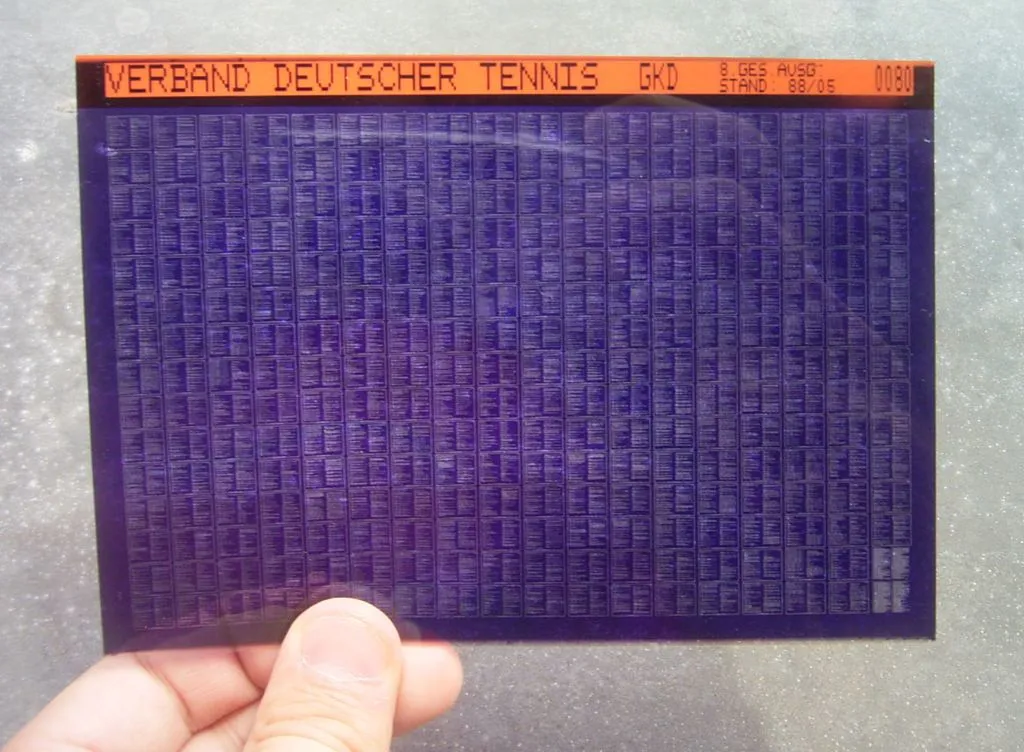
Microfilm/ microfiche was revolutionary at one time. In the mid-20th century, these small-scale media formats were a solution that allowed the storage of high volumes of documents in a small physical format. Government agencies archived tax records and deeds of property. Old newspapers were also kept in libraries. Corporations created engineering blueprints and payroll logs on microfiche.
Need a microfiche or microfilm scanning company rather than a DIY scanner? Smooth Solutions, a DMI company, scans roll film and fiche at DMI’s Kodak-certified film lab in New Castle, Delaware, on production scanners including nextScan Eclipse and FlexScan systems, applies OCR and indexing, and delivers searchable PDF or TIFF files. See our microfiche and microfilm scanning services or call 1-800-DMI-4210 for a free sample scan.
However, despite their historical importance, such formats are presently becoming a thing of the past. Physical degradation cannot be avoided as the film becomes brittle, photographs fade, and fiche sheets curl with age.
On top of that, the specialized viewing equipment required is both costly and increasingly scarce. Even when available, it’s prone to frequent breakdowns. Perhaps most frustrating of all, these records are inaccessible to most end users, limiting their usefulness in today’s digital-first world.
This is where microfiche scanning services come in.
Modern Microfilm and Microfiche Scanning Technologies
Today’s scanning solutions are different from yesterday’s heavy and manual systems. Current microfilm and microfiche scanners have high-resolution sensors, sophisticated software, and automation processes that convert analog films into sharp digital images.
Important characteristics of modern scanning solutions include:
- High-resolution optics detail all the features of the original film, even where low contrast was applied or the image is dim.
- Optical Character Recognition (OCR), a process that turns images produced by scans into text-searchable documents, and thus, works perfectly with materials such as ledgers, reports, and legal files.
- Minimum handling structures that safeguard fragile films and limit physical degradation in the process of digitizing them.
Put simply, it is not just the reproduction of the old systems: the old becomes something new, something that is discoverable, searchable, and is connected to the modern ways of information workflow.
But why digitize today? Here are some benefits of modern solutions for scanning microfilm and microfiche archives.
Better Digital Access and Metadata Information Integration
Enhancing access to the past content (historical) is one of the best things about digitization. Indexing, classification, and full searchability of microfilm or microfiche images on the computer is feasible when converted into digital files through embedded metadata.
Using scanned assets in combination with digital asset management systems (DAMS), organizations are able to catalog their archives using custom taxonomies, access control, and search. Instead of shuffling through fiche cards or reels of film, records can be recalled with simple keystrokes.
This is the true power of digitizing microfiche and microfilm: It transforms inaccessible analog files into living digital resources.
Conversion at Any Scale
Cost is among the biggest concerns organizations have about digitization. Today, production scanners and automated workflows make it practical to convert anything from a few reels to millions of images.
There are options to choose between the following:
- In-house scanning services with commercial-grade equipment.
- Outsourced services that complete big volume jobs in time and with precision
Each approach offers distinct advantages. In-house scanning provides greater flexibility and control, making it ideal for ongoing or sensitive projects. However, this option is suitable for scanning small volumes of data.
Outsourcing, on the other hand, is ideal for large backlogs and often includes value-added services such as metadata tagging, file formatting, and delivery via cloud-based repositories.
Compliance, Security, and Long-Term Storage
Saving information is not only a matter of convenience but also requires compliance with the law.
Digitized archives should be:
- Secure: Through encryption, access control, and cloud backup
- Compliant: Compliant with requirements such as ISO, HIPAA, or GDPR, depending on the sphere of the organization
- Future proof: Stored, at least, in non-proprietary formats, such as PDF/A or TIFF, since they are readable on future platforms
Also, catastrophe recovery requires digital preservation. Delicate microfilm collections can be damaged by fire, floods, or even by human-prone mistakes. When the records are backed up and computerized, they can withstand virtually any disaster.
That’s why many institutions are investing in microfilm scanning services to create robust digital copies as part of their continuity plans.
Improving Image Quality During Conversion
Film that has faded, scratched or warped over time can often be improved when it is scanned. Image processing can reduce scratches, specks, border problems and warping, so the digital image may be easier to read than the original film.
Scanning in grayscale rather than black and white is recommended for old or faded film, because it captures more image data and improves legibility. Format also matters. Microfilm reels hold thousands of images, while a microfiche sheet usually holds one related batch of documents, so the two are planned and indexed differently.
Conclusion: Going Digital in Futuristic Archiving
Institutions can transform vulnerable films into effective electronic data using progressive scanning technologies, OCR software, and metadata incorporation.
It does not matter whether you are a public agency, a university, a hospital, or a private corporation, it is high time you evaluate your archival material and create your digitization strategy. The instruments are available, the risks are obvious, and the payoffs, in the form of accessibility, compliance, security, and efficiency, are too valuable to ignore.
Let’s create digital collections that are prepared for the future. Contact Smooth Solutions today for professional microfilm and microfiche scanning services.


